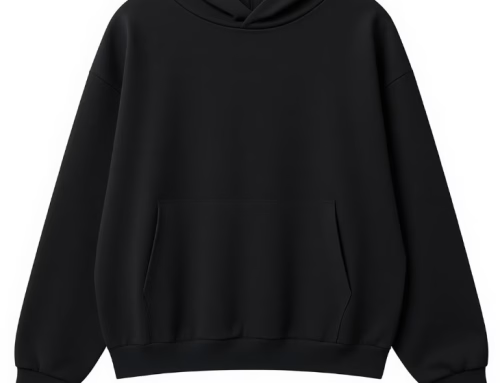

Mastering the perfect acid wash t-shirt, the kind that looks like it’s lived a life before you even bought it, isn’t magic. It’s pure engineering. You want that authentic 2026 retro aesthetic, that lived-in feel? It starts with understanding the brutal science happening inside the industrial washing machines. We’re talking chemical ratios, temperature control, and fabric tension. Forget the marketing fluff. This is about what happens on the factory floor, at scale. Getting it right for a thousand units without destroying your fabric or your margins? That’s the real challenge. This post breaks down the manufacturing craft behind those coveted vintage wash custom tees.
Why is Scaling Vintage Washes So Damn Hard?
Look, anyone can take a single t-shirt, throw it in a machine with some pumice stones and bleach, and get a ‘look’. That’s easy. But what happens when you need that exact same subtle fade, that specific soft hand-feel, on a thousand units? Suddenly, it’s not so easy. It’s a complex chemical and mechanical equation. Consistency is the ghost everyone chases. Fabric integrity is the first casualty. Print durability is the second.
The Fabric’s Worst Nightmare: Micro-Tears and Holes
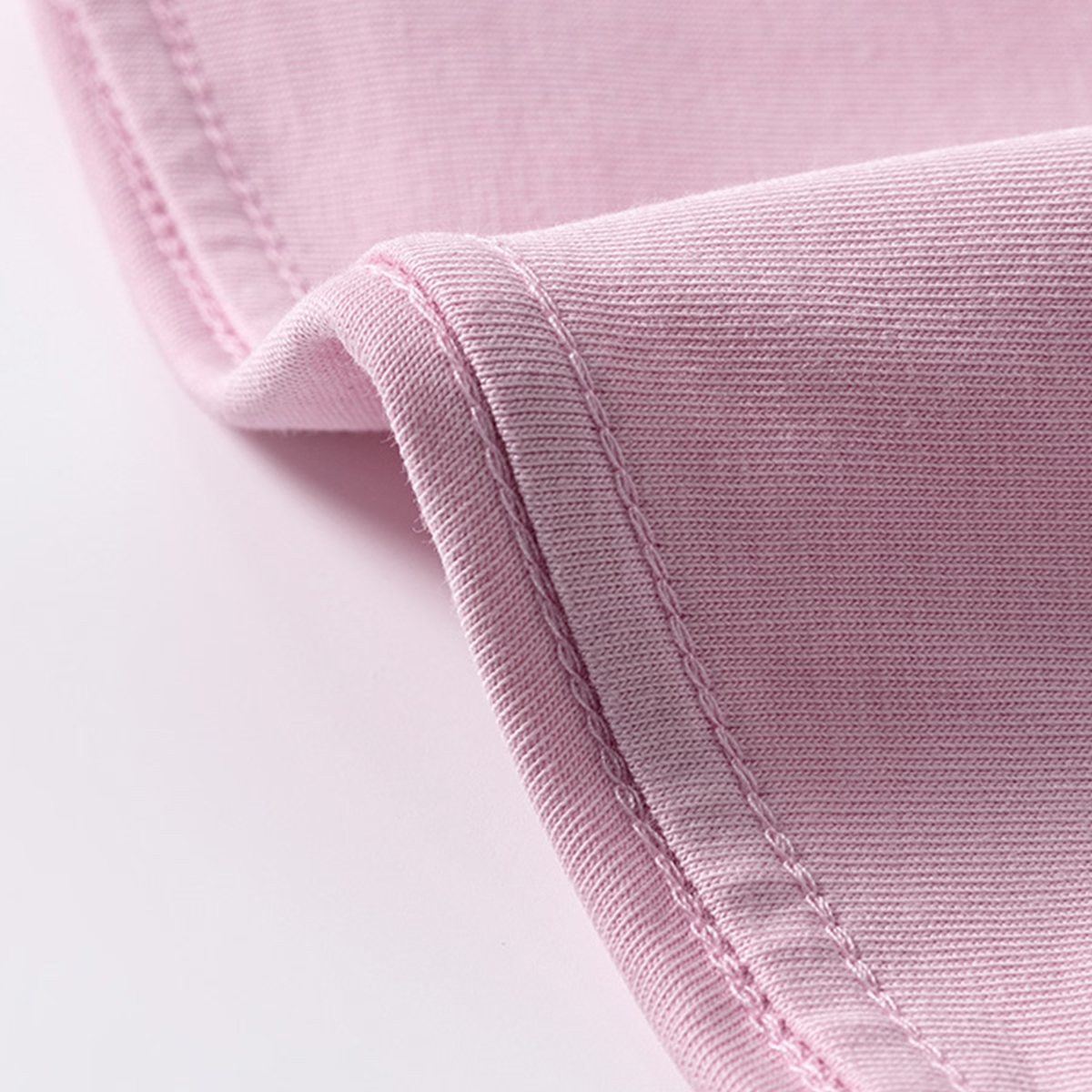
Acid washing, at its core, is controlled destruction. We’re breaking down the cellulose fibers. This creates that faded, worn-in look. But push it too hard, use the wrong abrasive, or run the cycle too long? You get micro-tears. These aren’t visible at first. They’re tiny fractures in the fabric weave. Then, after your customer wears it, or washes it again? Those micro-tears become gaping holes. Your brand looks cheap. Your reputation tanks. This is a primary reason why many brands struggle with wholesale acid wash t-shirt orders.
Yali’s Engineering Fix: Controlled Abrasion & Buffering
We don’t guess. We measure. The exact pumice stone-to-garment weight ratio is critical. Too much stone, too much friction, too much time – boom. Holes. We use specific grades of pumice, sometimes even synthetic abrasives, depending on the fabric weight and desired effect. But it’s not just about the stones. We use buffered enzymes. These enzymes are designed to soften the cotton cellulose gradually. They work at specific temperatures, typically around 60°C. Buffering prevents the pH from dropping too low, which would aggressively attack the fabric’s strength. This keeps the structural integrity intact. It’s about softening, not shredding.
Seam Issues: Puckering and Thread Breakage
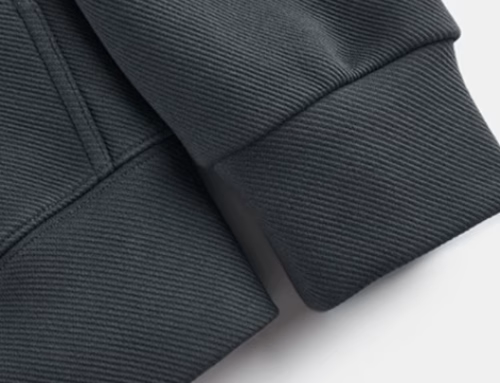
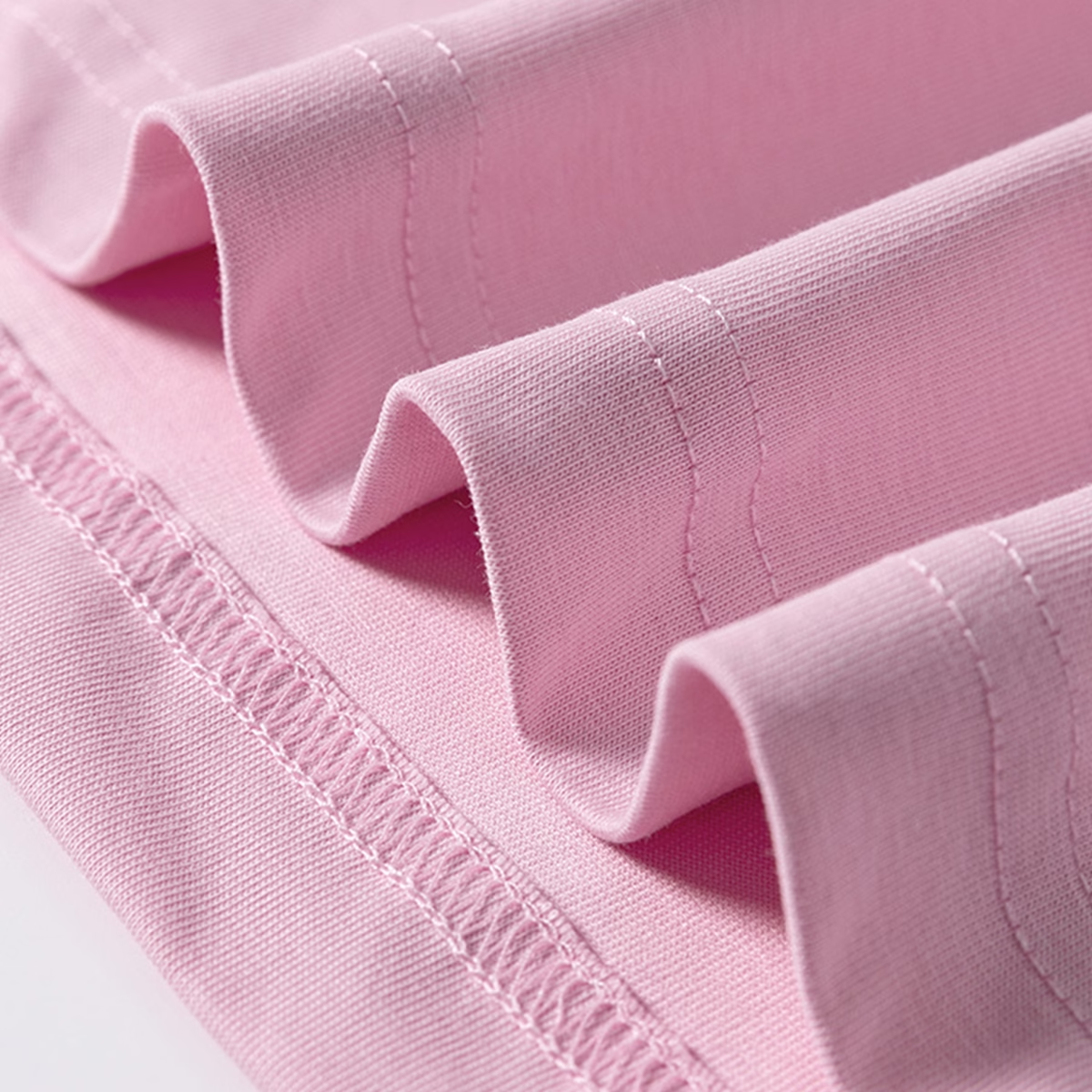
Collars. Cuffs. Side seams. These are high-stress areas. Heavy washing cycles, especially with aggressive mechanical action, can distort the ribbing on collars and cuffs. Seams can pucker. Threads can snap. This isn’t just an aesthetic issue; it’s a structural failure. A puckered seam looks unprofessional. A broken seam means the garment falls apart. Many streetwear apparel factories overlook this. We don’t.
Pre-Wash Reinforcement: Tension Calibration is Key
The fix happens *before* the wash. We use tension-calibrated sewing machines. This ensures the thread tension is correct for the fabric weight and the expected stresses of the washing process. For critical areas like the neckband, we use double-needle cover-stitching. This provides reinforcement and flexibility. The garment has to be constructed to withstand the abuse of the finishing process. We choose the right thread, too. More on that later. Proper construction means the garment survives the vat, looking better.
Print Durability: The Sequencing Nightmare
You want a distressed puff print? A cracked screen print on your vintage wash custom tees? Great. But when does that print get applied? This is where many brands get it wrong. Applying a print *before* a heavy acid wash is usually a death sentence for the ink. The stones, the chemicals, the tumbling action will rip it apart. Or at least, make it look like garbage.
The Yali Apparel Method: Post-Wash Printing
We print after the wash process. This is non-negotiable for most distressed or textured prints. The fabric is already softened and faded. The print adheres to a stable, finished surface. If you put a puff print into an industrial washing machine with pumice stones, the ink peels right off. Simple as that. We apply the print, then cure it properly. This sequence ensures the print lasts. It integrates with the garment’s aged aesthetic, rather than fighting against it.
Collar Integrity: Maintaining Shape and Stretch


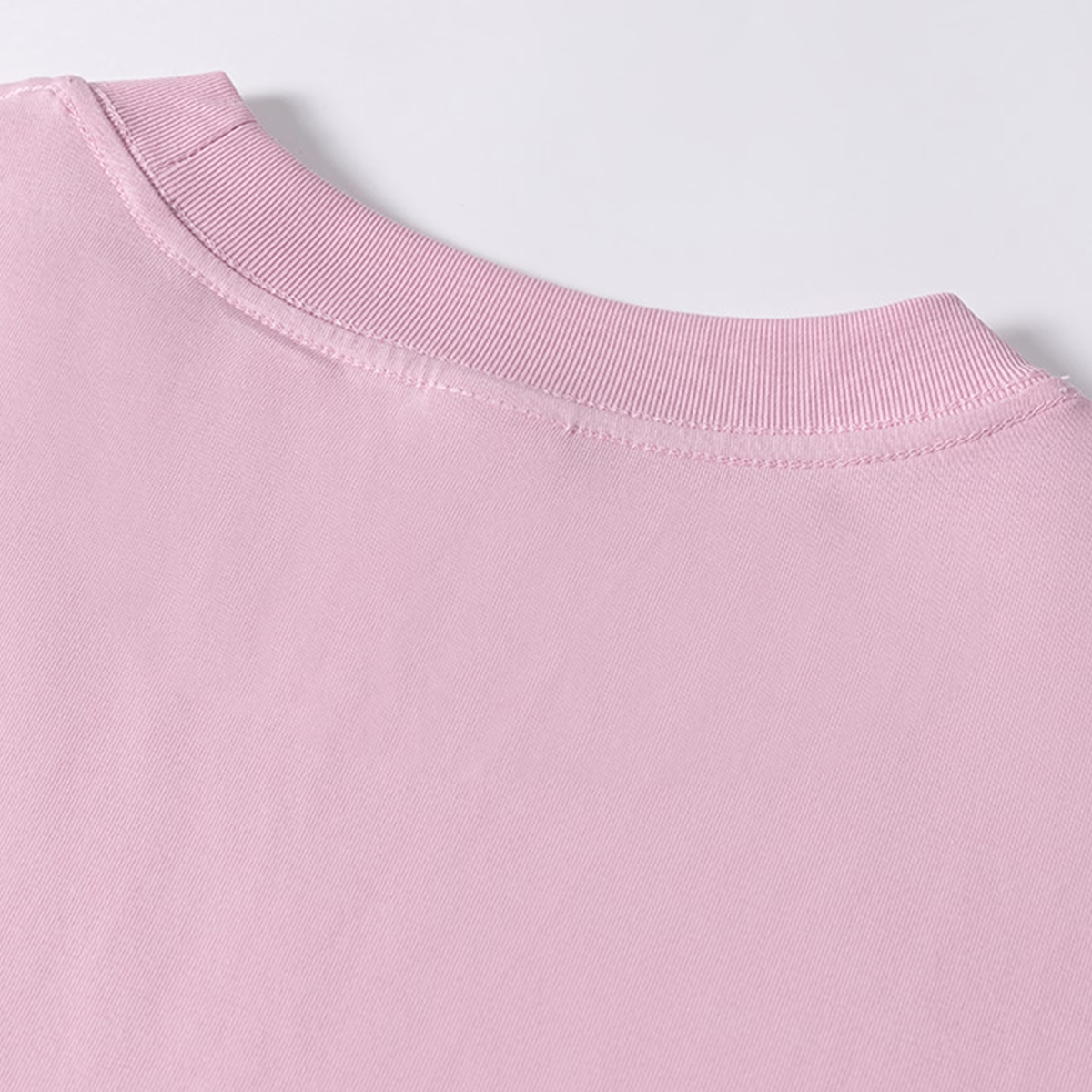
A common failure point on vintage wash tees? The collar. It loses its shape. It goes floppy. Why? Over-exposure. Harsh chemicals, particularly bleach, attack the elastane or spandex content in the rib knit. This elastic fiber loses its ‘memory’. It can’t snap back. You end up with a stretched-out, sad-looking collar after only a few wears. This is a death knell for a premium streetwear piece.
Engineered Ribbing and Precise Temperature Control
Our solution starts with the raw material. We specify high-density 1×1 or 2×2 rib knits. These have more wales and courses per inch, providing a sturdier base. We also carefully calculate the elastane blends – usually between 2-5% depending on the desired stretch and recovery. Then, during the wash cycle, temperature is paramount. We monitor and control it precisely. We avoid excessive heat or prolonged exposure to aggressive chemicals that would degrade the elastane. This protects the collar memory. The garment dyed blank tees we produce hold their shape.
Dye Chemistry: Pigment vs. Reactive
Understanding dye types is fundamental for achieving that specific vintage look. Not all dyes are created equal, especially when you’re aiming for that authentic 90s vibe.
Pigment Dye: The Authentic Fade
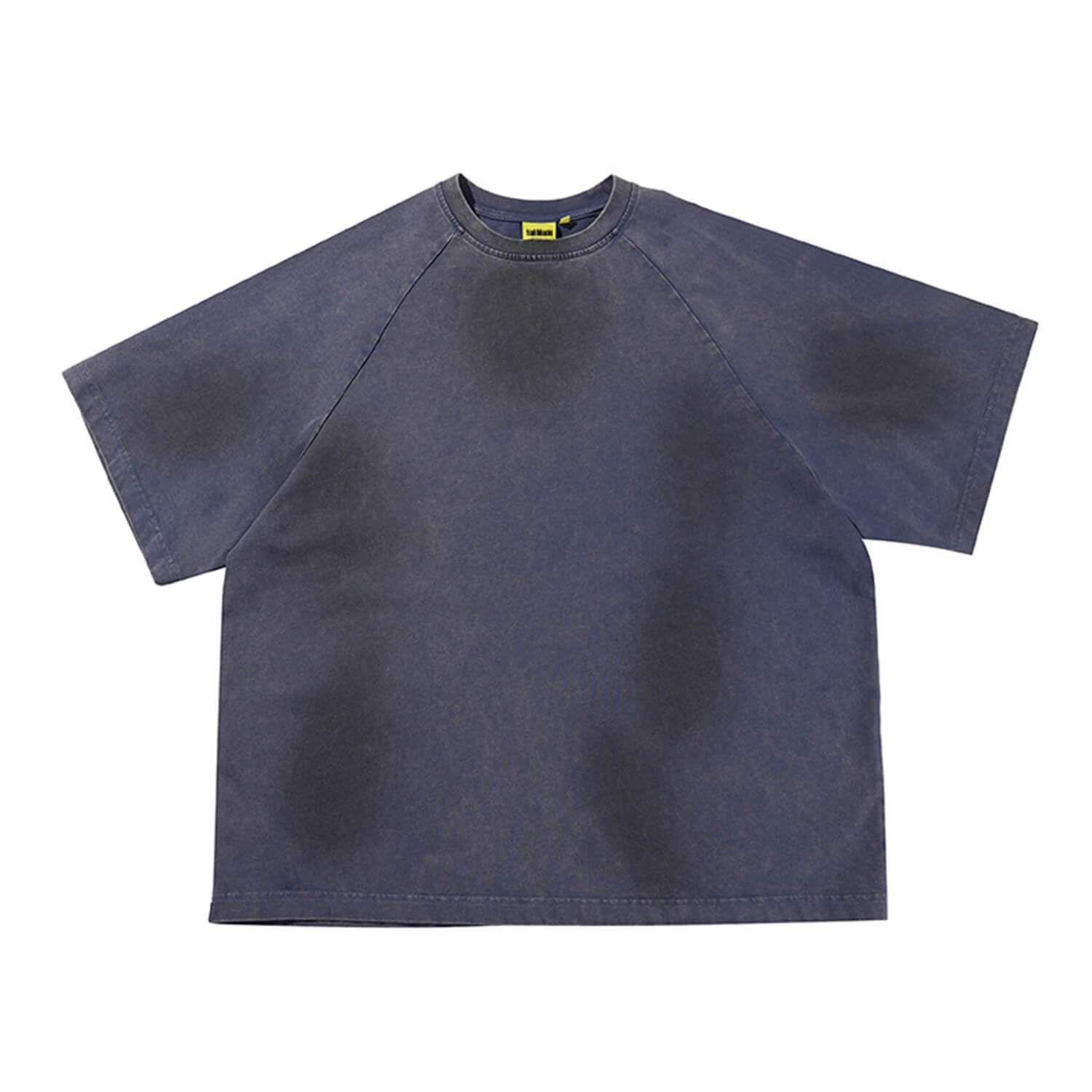
Pigment dyes sit on the surface of the fiber. They don’t chemically bond. This is key. Because they’re on the surface, they are susceptible to abrasion and washing. This causes them to fade, especially at the seams and high-wear areas. This friction fading is exactly what creates that characteristic vintage, worn-in look. It’s the aesthetic 90s streetwear brands chased.
Reactive Dye: The Solid Foundation
Reactive dyes, conversely, chemically bond with the fiber. They penetrate deeply. This results in a solid, vibrant, and much more colorfast end product. While great for many applications, reactive dyes don’t give you that authentic, heavy fade and seam contrast associated with true vintage washes. For that specific retro aesthetic, pigment dye is the way to go.
The Seam Color Conundrum: Why It Matters
Ever notice how the seams on some garment-dyed tees look unnaturally bright or almost un-dyed compared to the body? That’s a manufacturing shortcut. It’s a sign the wrong thread was used.
Engineered Cotton Thread for Even Dyeing
Standard polyester sewing thread does not absorb pigment dye well. It’s chemically different. So, when the garment goes into the dye vat, the fabric takes the color, but the polyester thread stays mostly its original color, or takes the dye very poorly. This results in that jarring, uneven look. At Yali Apparel, we engineer our vintage blanks strictly with 100% combed cotton thread. This ensures the seams dye perfectly evenly with the body of the shirt. It’s a small detail, but it’s crucial for a premium finish.
Fabric Weight Management: GSM Calibration
Washing processes, especially mechanical ones like acid washing, inherently remove material. This means the fabric weight, measured in grams per square meter (GSM), decreases.
Starting Heavier for the Perfect Finish
Yes. The mechanical abrasion eats about 10-15% of the GSM. A common mistake is starting with a standard weight fabric and ending up with something too thin and flimsy after the wash. To fix this, Yali Apparel starts with a heavier base fabric. We typically use a 250 GSM cotton for our vintage wash blanks. This ensures that after the 10-15% GSM reduction from the washing process, the final garment lands at a perfect, durable 215-220 GSM. This weight feels substantial, drapes well, and holds up.
Ensuring Color Consistency at Scale
Achieving consistent color across a 1,000-piece bulk order for acid wash t-shirts is a major engineering feat. It’s not about luck. It’s about meticulous control of the dyeing variables.
Vat Mathematics: Temperature and Ratio Control
It comes down to vat mathematics. We strictly control the water temperature. For enzyme washes, this is usually around 60°C. Too cold, and the enzymes are sluggish. Too hot, and you risk damaging the fabric or setting the color unevenly. We also calibrate the exact dye-to-water weight ratio in our industrial vats. Every batch uses precisely measured chemicals and dyes. This precision minimizes batch-to-batch variation. It ensures your entire order matches the approved sample.
Shrinkage Control: Zero Surprises for Your Customers
Shrinkage is a major headache for retail customers. A shirt that fits perfectly in the store but shrinks dramatically after the first wash is a recipe for returns and bad reviews. Many brands worry about this with garment-dyed and washed items.
Industrial Pre-Shrinkage for Retail Stability
No. Our industrial washing process acts as an extreme pre-shrink. The garments undergo rigorous tumbling and agitation in controlled conditions. They leave our factory with a 0% shrinkage rate. This means the sizing charts you provide are accurate. The garments will maintain their intended fit through their lifecycle. This stability is vital for customer satisfaction and brand loyalty.
The science of garment finishing, particularly for vintage and acid washes, is intricate. It demands deep technical knowledge and rigorous process control. It’s about balancing aesthetics with durability, achieving consistency at scale, and understanding the chemical and mechanical forces at play. This isn’t guesswork; it’s applied engineering.
Bring your most complex wash and print tech packs to Yali Apparel. Our engineering team is ready to execute reliably at bulk.