
The B2B Buyer’s Checklist: Evaluating Hoodie Blanks for Weight, Fabric, and Durability
You’re buying hoodie blanks wholesale. You see a sample. It feels decent. Then bulk arrives. It falls apart after two washes. Sound familiar? This happens because most B2B buyers don’t know what to check. They trust a handshake. That’s a fast track to losing money and reputation. This guide cuts the fluff. It’s your factory-floor checklist for evaluating hoodie blanks, focusing on weight, fabric, and durability. No BS. Just numbers and facts.
Why Are You Guessing? Get the Specs Right.
Middlemen sell you a story. I sell you a product. A well-made product. Your brand depends on it. Your bottom line depends on it. Getting hoodie blanks right from the start avoids costly returns and angry customers. It’s about precision.
Key Takeaways
- Understand GSM: It’s not just a number; it dictates drape and warmth.
- Fabric Matters: Ring-spun is king for feel and longevity; avoid cheap cotton.
- Stitching is Strength: Double-needle cover-stitching is non-negotiable for key stress points.
What’s the Real Deal with Fabric Weight (GSM)?
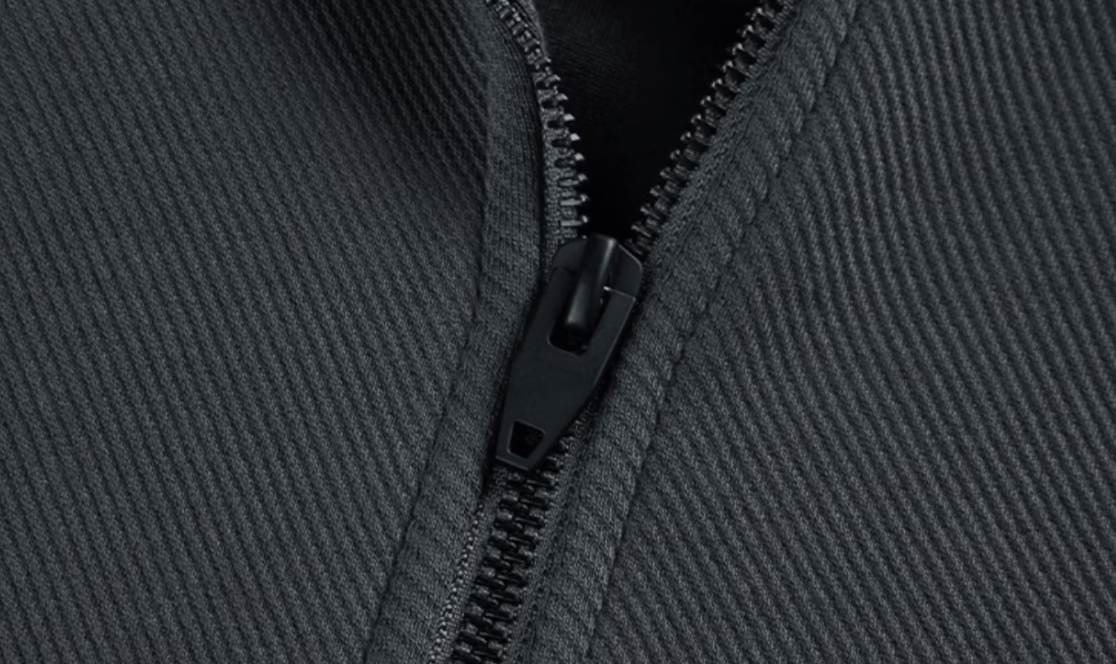
GSM stands for Grams per Square Meter. Simple enough. It’s the weight of the fabric. A higher GSM means a heavier, denser fabric. This affects the hoodie’s drape, warmth, and perceived quality. Cheap suppliers push lower GSM to cut costs. They call it ‘lightweight’ or ‘mid-weight’. It’s often just thin.
For a standard, everyday hoodie blank, aim for 300-350 GSM. This hits the sweet spot. It feels substantial without being overly heavy. Streetwear brands? They want that premium, heavyweight feel. You’re looking at 400 GSM or more. Anything below 280 GSM? It’s basically a long-sleeve t-shirt. Don’t pay premium prices for t-shirt weight if you want a hoodie.
How to Evaluate Fabric Composition: Cotton vs. Blends
The fiber matters. 100% cotton sounds premium. It can be. But not all cotton is created equal. Cheap cotton uses open-end yarn. This process is faster, cheaper. It leaves short, stray fibers. These fibers break. They pill. Your $80 hoodie looks like a $10 rag after a few wears.
Combed, ring-spun cotton is different. Fibers are combed clean. Then spun into a tight yarn. This aligns fibers. Less breakage. Less pilling. A much smoother, stronger fabric. It feels better. It lasts longer. This is what you need for quality hoodie blanks.
What about blends? A Cotton/Polyester mix is common. Good reason. Cotton gives you that soft, natural hand-feel. Polyester adds durability and reduces shrinkage. For a good balance, aim for 80% cotton to 20% polyester (80/20). A 70/30 split is also acceptable. You get the benefits of both. Pure polyester hoodies? They can feel cheap, static-prone. Avoid them unless your brand is specifically athleisure and you know the fabric tech.
Assessing Durability: Stitching and Construction Details
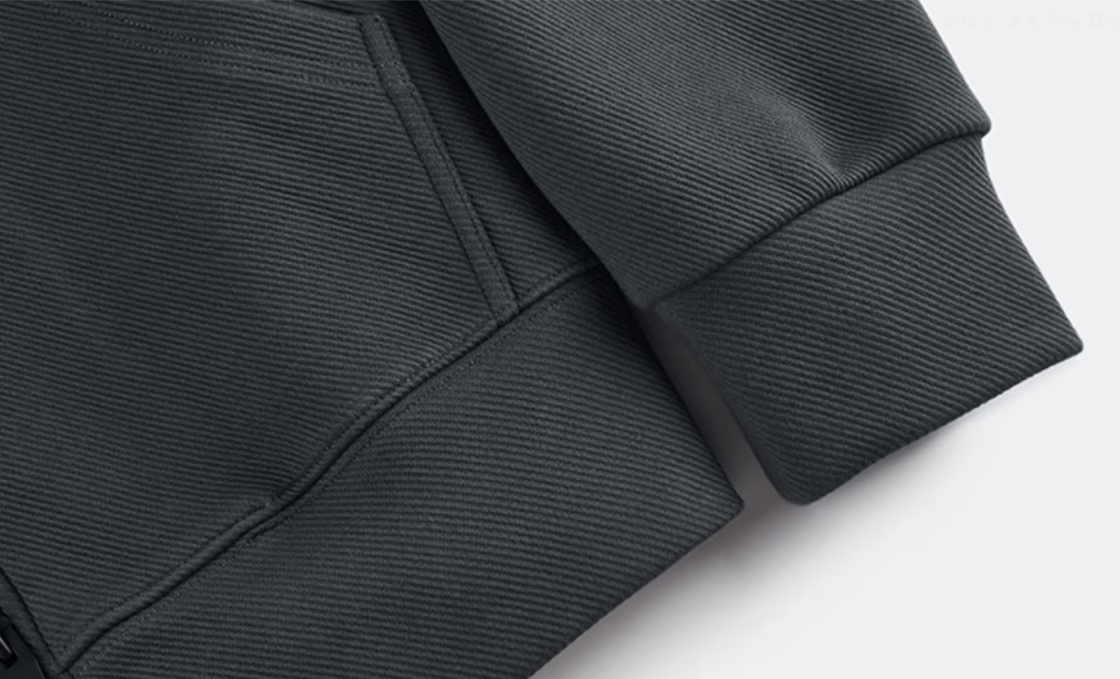
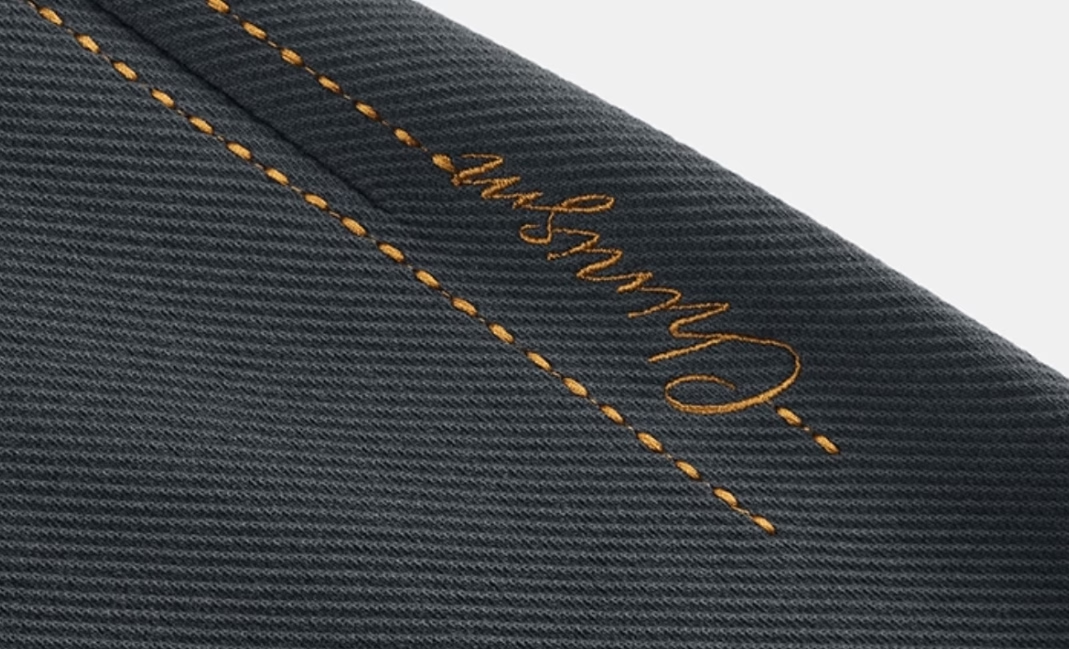
Fabric is one thing. How it’s put together is another. Stitching is your first line of defense against a garment falling apart. Look at the seams. Are they straight? Are the stitches consistent? Tension too tight? It can cause puckering. Too loose? It can pull apart.
Pay close attention to high-stress areas. Armholes. Neck seams. Cuffs. Hem. These get pulled. They stretch. They experience friction. Single stitching in these areas is a death sentence for a hoodie. It will rip. You need double-needle cover-stitching. This is standard on quality t-shirts and essential for hoodies. It provides strength and a clean finish. A factory skimping here is cutting corners everywhere.
The hood itself needs attention. The drawstrings should be well-secured. The eyelets should be reinforced, not just punched holes. The ribbing at the cuffs and hem? It needs to snap back. Low-grade ribbing with no elasticity will sag. Look for a blend with 5% spandex or elastane in the rib knit. This ensures it retains its shape wash after wash.
Understanding Fabric Shrinkage: A Factory Floor Reality
Untreated cotton shrinks. It’s a fact of nature. Standard cotton can shrink 8-10% after the first wash. Imagine your $60 blank shrinks down two sizes. Disaster. A competent manufacturer addresses this. They pre-shrink the fabric rolls before cutting. This is called sanforization. Alternatively, they can use a garment wash process after the hoodie is sewn. This also reduces shrinkage.
If a supplier doesn’t mention pre-shrinking or garment washing, assume they aren’t doing it. They are passing the problem to you. Your goal is to keep bulk shrinkage under 3-5%. Anything more is unacceptable for a premium blank. This is a critical metric to confirm with your manufacturer.
For context on fabric standards, the ISO 20740:2018 standard provides guidelines for assessing the dimensional stability of fabrics, a key indicator of shrinkage potential.
The Yali Apparel Advantage: Direct Factory Control
Why deal with layers of middlemen? They add cost. They reduce clarity. They often don’t understand the technical details. You end up with substandard products. Yali Apparel is a direct factory. We build hoodie blanks to your exact specifications. Your tech pack is our blueprint. We control every step. From yarn sourcing to final QC inspection.
You want 320 GSM? Ring-spun cotton? Double-needle stitching? Pre-shrunk fabric? You get it. We don’t dictate. You design. We execute. This direct relationship means transparency. It means quality you can verify. It means protecting your profit margins because you’re cutting out the fat.
FAQ
What does GSM actually mean when buying hoodies?
Grams per Square Meter. 300-350 GSM is your standard mid-weight. 400+ is heavyweight streetwear. Anything under 280 is basically a long-sleeve t-shirt in disguise.
Why do some 100% cotton hoodies still pill aggressively?
Because the factory used cheap open-end yarn. You need combed, ring-spun cotton. It aligns the fibers tightly so they do not break and form fuzz balls.
What is the optimal Cotton/Polyester blend ratio?
80/20 or 70/30. You want cotton for the premium hand-feel, but you need that 20-30% polyester for structural integrity and to prevent massive shrinkage.
How do I properly check the stitching quality on a sample?
Turn it inside out. Look at the armholes and neckband. If it is single-stitched, it will rip. Insist on double-needle cover-stitching for high-stress seams.
Why does the bottom ribbing lose elasticity so fast?
Cheap suppliers use low-grade ribbing with zero stretch recovery. You need at least 5% spandex or elastane mixed into the 1×1 or 2×2 rib knit.
How much fabric shrinkage is acceptable in bulk production?
Standard untreated cotton shrinks 8-10%. That is a disaster. A good factory pre-shrinks the fabric rolls or uses a garment wash to keep bulk shrinkage under 3-5%.
Why source custom blanks hoodie directly from Yali Apparel instead of a local wholesaler?
Wholesalers dictate the specs. At Yali Apparel, you act as the architect. You control the GSM, the yarn quality, and the fit directly at the factory level, protecting your margins.
Stop guessing. Stop overpaying for mediocrity. Bring your tech pack to Yali Apparel. Get a real factory-direct quote. See the difference precision makes.