
The Complete Apparel Production Guide: Navigating Risks in Fabrics, Accessories, and Craftsmanship
We have compiled this “Guide to Avoiding Pitfalls in Garment Fabrics, Accessories, and Craftsmanship.” Based on an analysis of the root causes of common problems, I have added practical experiences and methods to help you take fewer detours. (This article analyzes solely from the perspective of risk prevention in garment manufacturing processes; design creativity is not within the scope of this text.)
Table of Contents:
-
What aspects should be noted in fabric application?
-
What are the common pitfalls when designing with various fabrics?
-
What are the common pitfalls when splicing fabrics?
-
What are the common pitfalls when matching fabrics with accessories?
-
What are the common pitfalls in printing, embroidery, and special processes?
-
How to avoid pitfalls when applying garment linings?
I. What aspects should be noted in fabric application?
-
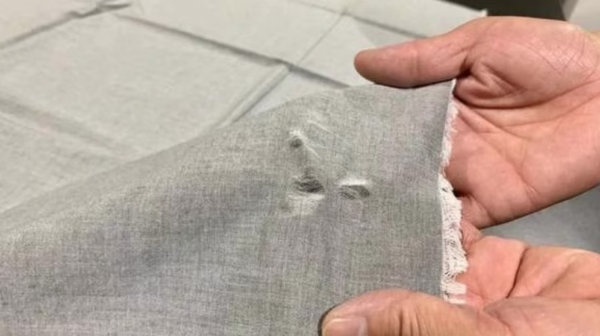
Tearing strength and seam strength of the fabric itself.
-
Washing colorfastness and warp/weft skewness.
-
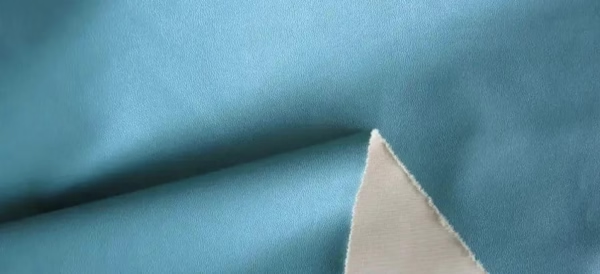
Peeling strength and abrasion resistance of coated and glued fabrics.
-
Rationality of seasonal fabric application:
-
Spring/Summer (approximate weight 180-300g): Cotton, silk, mercerized cotton, faux silk, chiffon, tulle, lace, water ripple, crystal linen, crepe de chine, etc., are commonly used.
-
Autumn/Winter (approximate weight 300-800g): Wool, cashmere, tweed, corduroy, melton, velvet, leather, etc., are commonly used.
-
All seasons: Denim, linen, pure cotton, nylon, and other blends.
-
-
Fabric weight, width, and shrinkage rate.
-
Fabric texture: Pilling, slubs, and hairiness. Note: Preliminary tests must be conducted on fabric swatches once the fabric development direction is determined.
II. What are the common pitfalls when designing with various fabrics?
-
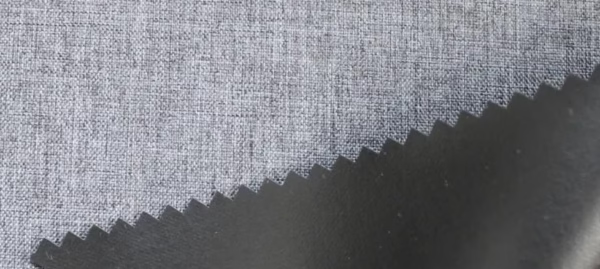
Coated Cotton and Memory Fabrics: Not suitable for sewing processes that can easily destroy the fabric structure, such as bartacking and thick thread sewing.
-
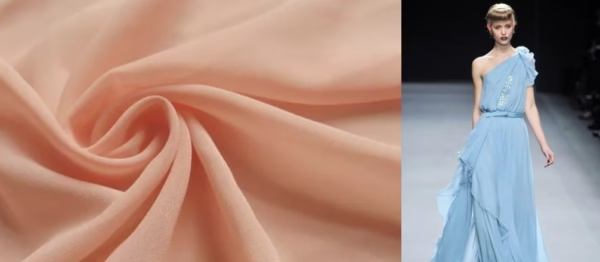
Sheer Fabrics and Special Jacquard Fabrics: Not suitable for styles designed with multiple pattern pieces and complex seams. Tight-fitting styles are not recommended for sheer fabrics to prevent the risk of seam slippage and tearing.
-
Glossy/Pearlescent Coated Fabrics: It is recommended to choose a nylon base fabric to prevent the coating surface from cracking; do not use polyester linings or accessories containing polyester to avoid color migration, and try to avoid color-blocking designs.

-
Interwoven Fabrics: Try to avoid dark colors. The garment construction process should consider potential techniques like adding interfacing, binding, and double topstitching.
-
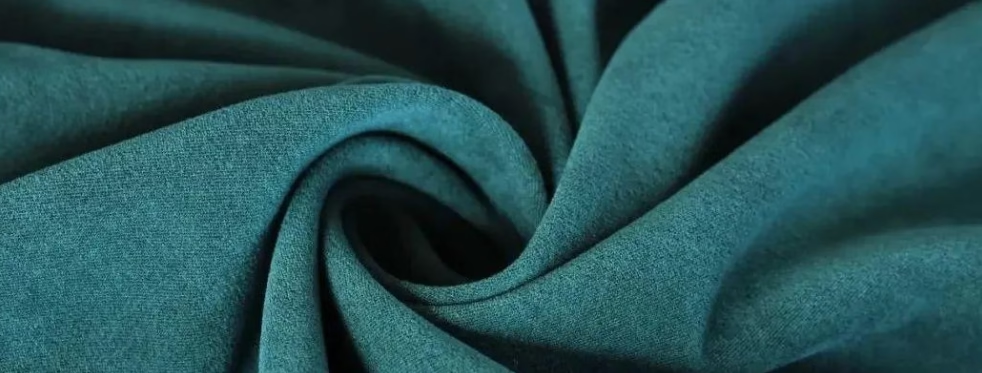
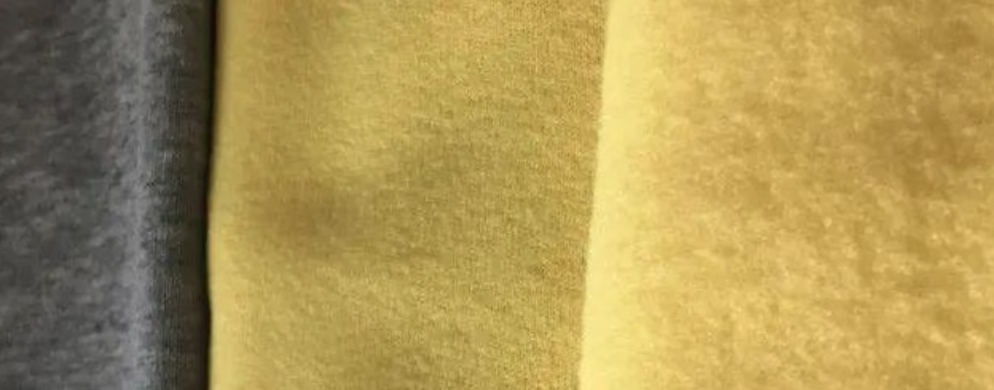
Brushed and Fleece Fabrics: Pay special attention to colorfastness. Try not to splice them with light-colored fabrics of the same material.
-
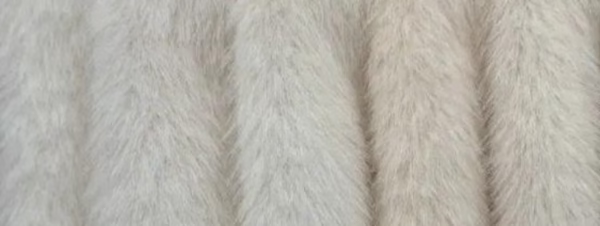
Shedding-prone Fabrics (e.g., Recovered Wool): Pay attention to the tightness of the fabric to control the risk of hair shedding.
-
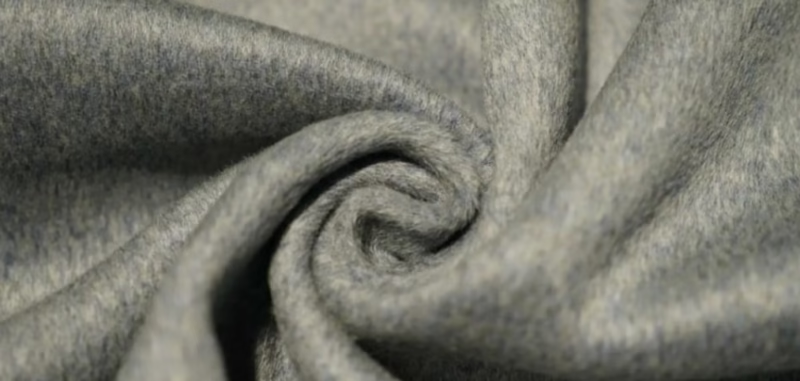
Smooth Wool Fabrics: Pay attention to the risk of pilling and fuzzing.
-
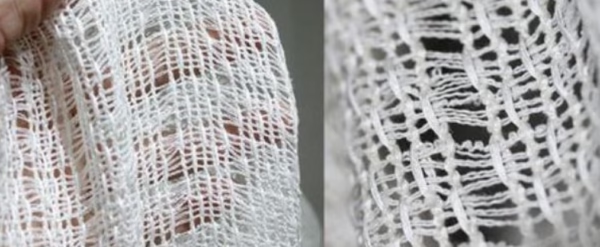
Loose Knit/Woven Structures: These belong to loose structural varieties. The design process should consider garment techniques like adding interfacing, binding, and double topstitching to reinforce the fabric.
III. What are the common pitfalls when splicing fabrics?
- Splicing Different Colors of the Same Fabric: Prevent dark colors from bleeding into light colors. Dark colors requiring special attention include black, royal blue, dark brown, dark purple, dark green, and dark red. When designers source fabric swatches, it is highly recommended to conduct dry and wet rubbing colorfastness tests themselves (including webbings and other accessories).
- Dry rubbing test: Use a piece of pure cotton fabric to rub against the black fabric.
- Wet rubbing test: Soak in warm water with alkaline laundry detergent. If possible, avoid splicing dark colors with light colors (especially black and white).
- Splicing Fabrics with Different Textures: Prevent friction pilling during the washing process. It is recommended that designers manually test by rubbing the swatches or conducting wear trials, as protruding areas are more prone to pilling during human movement.
- Splicing Fabrics with Large Shrinkage Rate Differences: Prevent wrinkling or twisting at the seams after washing. Always pay attention to shrinkage issues.
- Fabrics with Loose Structures: Fabrics like chiffon are highly prone to seam slippage. Designers are advised to conduct strength tests on fabric swatches. Thin and light fabrics carry a risk of tearing at the seams. It is recommended to design loose-fitting styles for such materials; avoid tight designs and ensure there is enough wearing ease in every part.
IV. What are the common pitfalls when matching fabrics with accessories?
-
Webbings/Tapes: When natural-colored cotton tapes, cotton ropes, and contrast webbings are used, test their colorfastness first to prevent dark tapes from fading and staining light-colored clothes. Watch out for differing shrinkage rates to prevent significant puckering after washing.
-
Snap Fasteners: When using snap fasteners on knitted fabrics, pay attention to the firmness to prevent the snaps from falling off.
-
Hand-stitching Threads: When using hand-stitching threads, thick threads, or woolen yarns, test the thread’s colorfastness to prevent the color from bleeding into the clothes after washing.
-
Plastic Buttons: If plastic buttons need to be dyed, ensure dark buttons do not fade onto light-colored clothes.
V. What are the common pitfalls in printing, embroidery, and special processes?
-
Dark Prints on Light Clothes: Remind the printing factory to prioritize print colorfastness to prevent the print from bleeding into the clothes after washing.
-
Light-colored Rubber Prints, High-build Prints, and Puff Prints: Check whether the base fabric’s colorfastness is high enough to prevent the fabric dye from migrating onto the print.
-
Discharge Printing: Check if the fabric thickness is suitable to prevent the structure from becoming loose and easily torn after discharge. Ensure it is reactive-dyed fabric to prevent fabric yellowing or incomplete discharge.
-
Embroidery: The embroidery stitching method and density must be adjusted according to the fabric’s thickness. Thin fabrics are not suitable for large-area, high-density, heavily layered embroidery; otherwise, issues like fabric damage and uneven shrinkage can occur.
-
Hot-fix Rhinestones and Sequins: Ensure the fabric texture is fine and smooth, and the glue adhesion is strong. This prevents massive shedding after washing.
VI. How to avoid pitfalls when applying garment linings?
-
Performance Matching: Shrinkage rate, heat resistance, and acid/alkali tolerance must be consistent with the main fabric. Strength and elasticity should also be as similar as possible. (e.g., pure cotton linings for pure cotton garments; anti-static linings for static-prone fabrics).
-
Color Harmony: The lining color should be the same as or slightly lighter than the fabric color.
-
Softness Compatibility: The lining should generally be softer and lighter than the main fabric. They must drape naturally together to avoid a “two-skin” separation effect that lowers the garment’s perceived quality.
-
Cost Matching: High-end fabrics are paired with premium linings, while low-end fabrics are paired with inexpensive linings, matching the commercial positioning of the garment.
The Yali-Clothing Advantage
Navigating the complexities of fabric combinations, accessory selection, and garment craftsmanship can be a massive headache for fashion brands, designers, and wholesalers. For B2B clients, the most critical pain points lie in unpredictable production risks—such as sudden color bleeding, mismatched shrinkage rates, or seam slippage. These pitfalls can easily ruin an entire bulk order, leading to severe financial losses, delayed product launches, and damaged brand reputation. This is exactly where Yali-Clothing steps in to provide the ultimate solution.
As a premier custom apparel manufacturer, Yali-Clothing leverages deep industry expertise to eliminate these technical nightmares before mass production even begins. From conducting rigorous pre-production material tests (including colorfastness, shrinkage, and seam strength) to ensuring the flawless matching of linings, trims, and special processes, Yali-Clothing handles every high-risk detail for you. By partnering with Yali-Clothing, B2B brands bypass the costly trial-and-error phase, guaranteeing that your creative designs are seamlessly and safely transformed into premium, market-ready products with maximum reliability and efficiency.