
Wie schafft man einen Design-Schwerpunkt in einem Kleidungsstück?
“Warum erregt dieses Stück keine Aufmerksamkeit?”
“Der Designfokus ist nicht ganz klar.”
“Es fühlt sich an, als wäre es fast fertig, aber irgendetwas fehlt, und ich weiß nicht, was ich reparieren soll.”
Wenn Ihnen das bekannt vorkommt, sind Sie nicht allein.
Bei der Gestaltung eines Produkts kommt es häufig zu Situationen, in denen ein Stil keinen klaren Schwerpunkt hat, der Schwerpunkt nicht stark genug ist oder er zwar hervorsticht, aber fehl am Platz wirkt.
Wie lösen wir also diese Probleme?
Beginnen wir mit den Grundlagen: die Arten von Gestaltungsschwerpunkten.
1. Dekorativer Gestaltungsschwerpunkt
Dieser Typ funktioniert am besten, wenn die Silhouette einfach und grundlegend ist und keine strukturellen Variationen aufweist - wie bei einem T-Shirt.
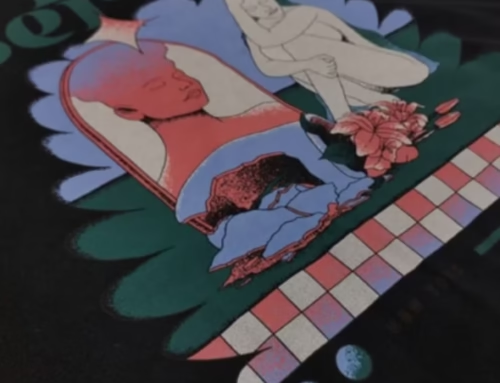
Zu den gängigen dekorativen Schwerpunkttechniken gehören Drucken, Färben, Sticken, Perlenstickerei, 3D-Verzierungen, Häkeln, Ausschneiden, Abnutzen, Absteppen, Einfassen, Binden, Fransen und Handbemalung.
Einer der häufigsten Schwerpunkte bei T-Shirts: gestickte Grafiken.
Ebenso profitieren einfache Denim-Modelle von Details wie rohen Säumen, Abnutzungen, Whiskering und Abschleifen.
Entwurfsprinzip:
Je einfacher die Silhouette ist, desto besser ist sie für dekorative Schwerpunkte geeignet. Je komplexer die Silhouette ist, desto weniger geeignet ist sie.
2. Dekonstruktiver (struktureller) Gestaltungsschwerpunkt
Dies ist bei vielen Designern sehr beliebt. Durch Techniken wie Drapieren kann ein flaches Muster in eine dreidimensionale Struktur verwandelt werden.
So sind Designer wie Gabriele Colangelo dafür bekannt, dass sie mit Hilfe der Dekonstruktion visuell überzeugende Designs schaffen, ohne zusätzliche dekorative Elemente hinzuzufügen.
Allerdings sind nicht alle Produktkategorien für diesen Ansatz geeignet. Im Großen und Ganzen kann das dekonstruktive Design als strukturelles Design verstanden werden.
Entwurfsprinzip:
Je moderner der Stil ist, desto besser ist er für strukturelle Schwerpunkte geeignet. Je traditioneller der Stil ist, desto weniger geeignet ist er.
3. Edge Design Schwerpunkt
Dieser Ansatz funktioniert am besten, wenn das Kleidungsstück saubere, minimale Farbschemata ohne übermäßiges Color-Blocking oder Muster verwendet, so dass die Randdetails zur Geltung kommen.
Diese Schwerpunkte werden entlang von Kanten wie Kragen, Säumen, Armlöchern und Manschetten gesetzt. Zu den gängigen Techniken gehören Binden, Kontrastnähte, Overlocking und Wellenkanten.
Entwurfsprinzip:
Je reiner die Farbpalette ist, desto besser eignet sie sich für Kantenschwerpunkte. Je komplexer das Farbschema ist, desto weniger geeignet ist es.
4. Stoffmanipulation Design-Schwerpunkt
Wenn ein Kleidungsstück aus einem einheitlichen Material ohne Variation in der Oberflächenstruktur besteht, kann es flach und eintönig wirken. Durch die Einführung visueller und taktiler Texturen können effektiv Schwerpunkte gesetzt werden.
Dabei wird die Stoffoberfläche verändert, um neue visuelle Effekte zu erzielen. Zu den gängigen Techniken gehören Plissieren, Smoken, Steppen, Prägen, Perforieren, Perlen, Ausschneiden, Applizieren, Zerknittern, Nähen, Reißen, Weben, Brennen und Schnitzen (bei Leder oder Metall).
In dieser Kategorie gibt es unzählige Möglichkeiten.
Die Schlüsselfrage lautet also:
Wie entscheiden wir bei der Zuweisung eines Designschwerpunkts, welchen Typ wir verwenden?
Die erste Überlegung sollte immer sein Stil und Positionierung.
Zum Beispiel mit einem Rock:
Wenn Sie einen eleganten und raffinierten Stil bevorzugen, können dezente Steppnähte als Blickfang dienen und einen Kontrast schaffen, ohne das Design zu überladen.
Wenn Ihre Positionierung modern und luxuriös ist, werden einfache Nähte nicht ausreichen. In diesem Fall würden kräftige Metallbeschläge die beabsichtigte Ästhetik besser zum Ausdruck bringen.
Dies veranschaulicht das grundlegende Prinzip:
Die Gestaltungsschwerpunkte müssen mit der Stilrichtung übereinstimmen.
Lassen Sie uns tiefer einsteigen.
Nehmen wir denselben Lederrock: Wenn es darum geht, Akzente zu setzen, stehen Designer oft vor diesem Dilemma:
Welche Größe sollten die Verzierungen (Knöpfe, Schnallen) haben? Wie breit sollten sie sein? Gibt es eine Norm?
Die Antwort ist eindeutig: Ja, und der Standard wird durch die Positionierung Ihres Stils definiert.
Für einen raffinierten urbanen Stil sollten die Beschläge dezent sein - kleinere Schnallen und schmalere Zierleisten sind ausreichend.
Für einen modernen, urbanen Stil sollte das Design die visuelle Wirkung, Stärke und Präsenz betonen. Größere Beschläge sind notwendig, um einen starken Blickpunkt zu schaffen. Andernfalls könnte sich das Design unzureichend oder “charakterlos” anfühlen.”
Ein Designschwerpunkt erfordert nicht immer einen Farbkontrast.
Sollten Sie zum Beispiel bei der Auswahl der Besätze für denselben Rock tonale oder kontrastierende Farben verwenden?
Es gibt keine absolute Regel.
Wenn Sie ein jugendliches, dynamisches Aussehen anstreben, sind Kontraste gut geeignet.
Wenn Sie Raffinesse anstreben, ist eine tonale Abstimmung angemessener - vor allem in Kombination mit matten Texturen und Materialveredelung.
Auch die Verwendung kontrastierender Texturen (z. B. Federn gegen glatten Stoff) kann selbst innerhalb derselben Farbpalette einen Schwerpunkt setzen.
Dies unterstreicht einen wichtigen Grundsatz:
Ihr Gestaltungsziel bestimmt, wie Sie Ihren Blickpunkt aufbauen.
Nachdem Sie die Grundlagen verstanden haben, sollten Sie sich drei wichtige Grundsätze vor Augen halten:
1. Wenn Stoff oder Farbe das Hauptverkaufsargument sind, vermeiden Sie eine Überfrachtung von Schwerpunkten
Stark verarbeiteter Jeansstoff zum Beispiel hat bereits eine starke optische Wirkung. Übergroße Knöpfe oder übermäßige Verzierungen können ablenken. Subtile Details - wie leichte Farbunterschiede am Kragen - reichen als sekundäre Blickpunkte aus.
Das Gleiche gilt für farblich abgesetzte Stoffe: Das Material selbst steht im Mittelpunkt, und die Verzierungen sollten dezent bleiben.
2. Unterscheidung zwischen Statement Pieces und Commercial Styles
Statement-Stücke sind kühn, experimentell und visuell auffällig. Sie sollen eher die Markenidentität repräsentieren als den Absatz fördern.
Kommerzielle Stile hingegen müssen Einnahmen generieren. Sie zeichnen sich in der Regel durch einen klaren Schwerpunkt in Stoff, Silhouette, Muster oder Detail aus - ohne übermäßige visuelle Überladung.
Der entscheidende Unterschied liegt in Konstruktionszweck, der den Umfang und die Intensität des Brennpunkts bestimmt.
Eine nützliche Analogie: In einer dunklen Stadtlandschaft wird ein einzelnes beleuchtetes Fenster zum Brennpunkt.
Im kommerziellen Design kann ein gut gewähltes Detail - wie zwei markante Knöpfe - als “beleuchtetes Fenster” dienen. Das gleiche Detail kann jedoch bei einem Statement-Stück unbemerkt bleiben.
Brennpunkte werden durch Kontraste geschaffen.
3. Schwerpunkte haben direkten Einfluss auf die Zugänglichkeit von Produkten
Ein starker Fokuspunkt kann ein Design lebendig und einnehmend wirken lassen - deshalb integrieren viele Marken sportliche Elemente, um die visuelle Attraktivität zu erhöhen.
Umgekehrt sorgen dezente Akzente für eine zurückhaltende, hochwertige Ästhetik.
Ein minimalistisches Design mit unauffälligen Tasten vermittelt beispielsweise eine raffinierte, distanzierte Eleganz.
Ersetzt man sie durch plakative grafische Aufnäher, wird das Design zugänglicher und dynamischer, verliert aber möglicherweise seine ursprüngliche Identität.
Es gibt kein absolutes Richtig oder Falsch, sondern nur eine Anpassung an Ihre Gestaltungsabsicht.
Die Gestaltung von Schwerpunkten ist an sich nicht schwierig.
Die eigentliche Herausforderung besteht darin, die richtigen Entscheidungen in einem wirtschaftlichen Kontext zu treffen:
Wann man einen Brennpunkt anbringt, welche Art von Brennpunkt man verwendet, wie man ihn ausführt und in welchem Maßstab.
Dies sind die Fragen, die eine sorgfältige Bewertung und Erfahrung erfordern.
Yali-Bekleidung (OEM/ODM-Hersteller)
Aus der Sicht der Yali-Bekleidung , ein erfahrener OEM/ODM-Bekleidungsherstellung Partner ist die Umsetzung von Designschwerpunkten in skalierbare, produktionsreife Lösungen der wahre Wert für Handelsmarken. Marke Kunden.
Wir sind spezialisiert auf BEKLEIDUNG CUSTOM OEM, KLEIDUNG GROSSHANDEL LEER, und EIGENMARKE ODM KLEIDUNG Lösungen, die Modemarken bei der Umsetzung von Designkonzepten in marktreife Produkte mit Präzision und Effizienz unterstützen.
Mit über 20 Jahren Erfahrung in der Herstellung und Partnerschaften mit über 300 globalen Marken helfen wir unseren Kunden nicht nur bei der Validierung von was Designschwerpunkt zu verwenden, sondern wie es in der realen Produktion funktioniert - unter Berücksichtigung von Ästhetik, Kostenkontrolle, Materialauswahl und Konsistenz bei Großaufträgen.
Für Marken, insbesondere für solche, die auf wettbewerbsintensiven Märkten skalieren, ist die Fähigkeit, sich an Entwurfsabsicht, Schwerpunktausführung und Herstellbarkeit ist entscheidend. Yali-Clothing überbrückt diese Lücke und sorgt dafür, dass jeder Schwerpunkt nicht nur visuell ansprechend, sondern auch kommerziell rentabel ist.