
Advanced Hoodie Pattern & Craftsmanship Deep Dive
You’re a brand founder, maybe a designer. You want hoodies that don’t just look good, they *feel* right. That means the pattern. It’s the blueprint. Get it wrong, and your premium streetwear turns into sloppy loungewear. This isn’t about trends; it’s about fit, fabric, and how it’s put together. We’re talking millimeters here. This is the deep dive into high-end hoodie patterns and the manufacturing reality, straight from the factory floor. Forget the marketing jargon. This is about engineering garments.
Why Does the Hoodie Silhouette Matter So Much?
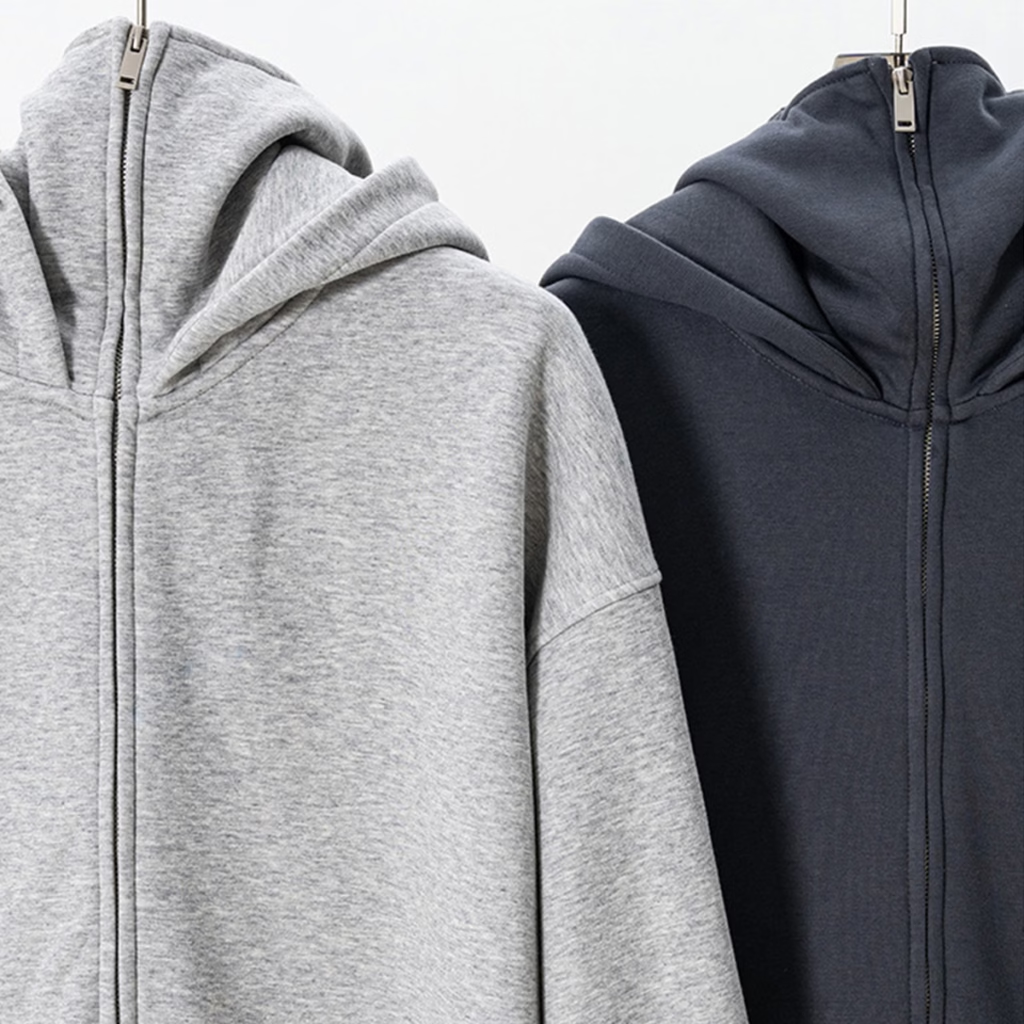
Look, anyone can sew two pieces of fabric together. But making a hoodie hang right? That’s different. The drop-shoulder, the armhole depth, the overall volume – it’s all critical. A millimeter off can send it from ‘cool oversized’ to ‘swimming in it’. Especially with the current demand for custom hoodie manufacturer services, getting the pattern perfect upfront saves a fortune in samples and revisions. Your brand’s perceived value hinges on this.
Key Takeaways
- Fabric weight (GSM) is non-negotiable for proper drape, especially in oversized fits.
- Cropped hoodie patterns require precise waist-to-shoulder ratios to avoid disproportion.
- Direct-to-factory sourcing cuts out middlemen, ensuring pattern integrity and cost efficiency.
- Shrinkage management is paramount, particularly for cropped styles where length is key.
The Oversized Hoodie Blueprint: Structure and Drape
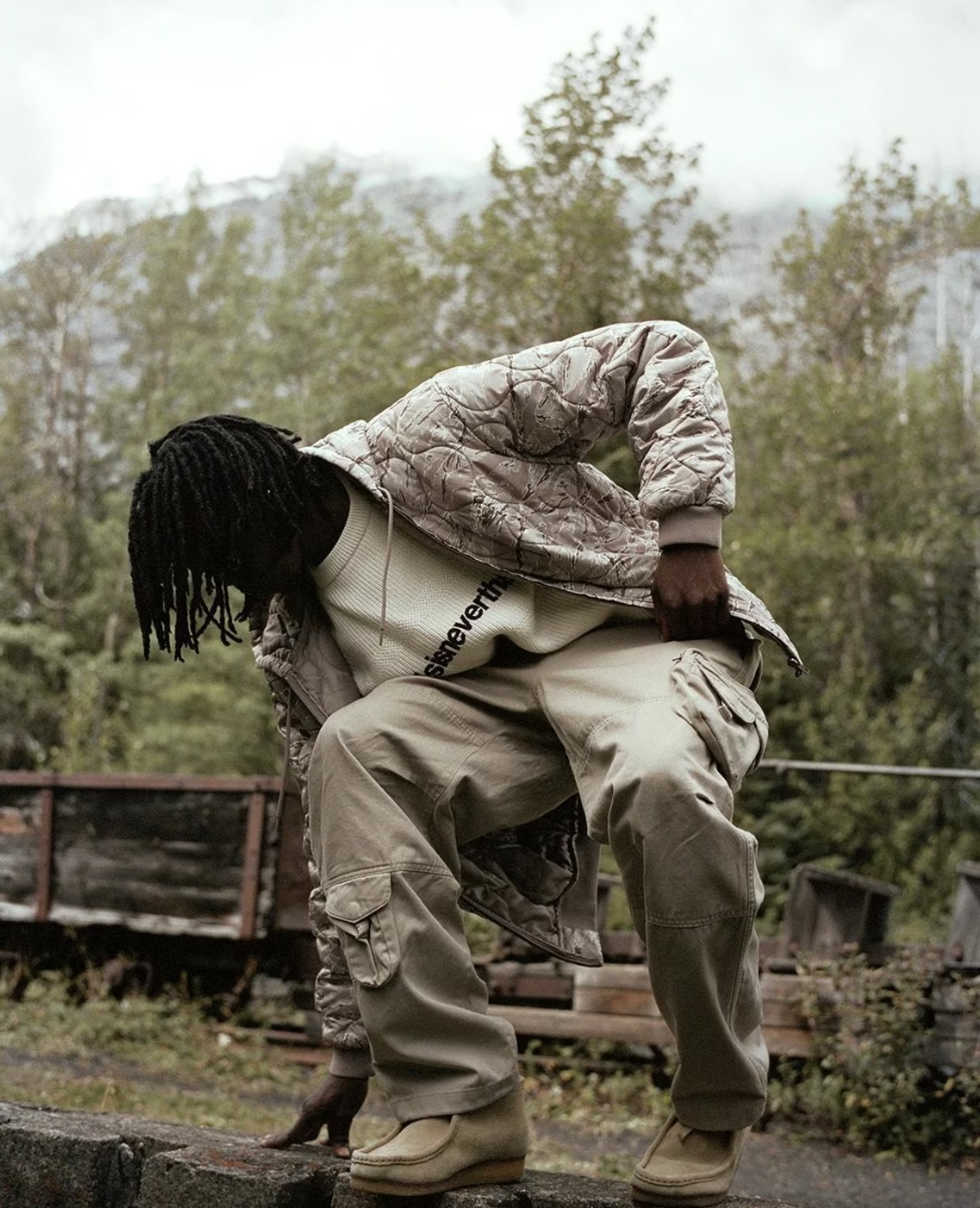
Oversized isn’t just ‘bigger’. It’s a specific engineering challenge. You need fabric with substance. I’m talking 350 to 590 GSM minimum for that heavy, structured feel. Anything lighter just clings. It looks cheap. It hangs wrong. The weight pulls the fabric down, creating that intentional drape, not a shapeless sack. This is why brands seeking oversized hoodie blanks often get disappointed with generic options.

Armhole Depth: The Unsung Hero
The armhole is where the magic—or disaster—happens. Too shallow, and it restricts movement, feeling tight across the chest and shoulders, even if the overall measurements are large. Too deep, and you get that dreaded ‘wingspan’ effect, making the wearer look like they’re wearing a tent. It needs to be balanced with the shoulder width and sleeve length. It’s a precise calculation, factoring in body movement. You can’t eyeball this.
Chest-to-Waist Ratio: Avoiding the Tent Effect
This is simple geometry. A standard hoodie pattern, scaled up massively without adjusting the waist taper, becomes a box. A big, shapeless box. For a truly premium oversized fit, the pattern needs a subtle, almost imperceptible, taper or a specific cut that allows the fabric to fall cleanly from the chest and shoulders. It’s about creating volume without sacrificing form. This is where direct-to-factory apparel expertise shines; we understand these nuances.
The Cropped Hoodie Equation: Precision and Risk
Cropped hoodies are risky business. Chop too much length, and you throw the entire proportion out of whack. The chest can suddenly look massive, the sleeves disproportionately long. It’s a delicate balance between the shoulder point, the bust/chest volume, and the final hem length. A common mistake is simply shortening a standard pattern. That doesn’t work. The pattern needs to be redrawn, considering the waist-to-shoulder proportion specifically.
Hemlines: Raw vs. Ribbed
Raw hems offer that edgy, deconstructed look. But they demand specific fabric choices. French Terry, especially a tighter knit, is your friend here. Standard fleece? Forget it. It will curl aggressively, looking messy after the first wash. Ribbed hems offer a cleaner finish and more structure at the waist. But again, the ribbing needs to be sourced correctly and sewn with the right tension to match the body fabric’s stretch and weight. This isn’t trivial.
The Manufacturing Reality: Tech Packs and Grading Nightmares
Here’s the blunt truth: many basic tech packs are garbage for complex fits like these. They list measurements, sure. But they often lack the critical construction details, the specific seam allowances needed for heavy fabrics, or the graded measurements that account for how fabric stretches and falls in different sizes. Grading – scaling a pattern across the size range – is a nightmare if the base pattern isn’t perfect. Get grading wrong, and your XS fits like an M, while your XL fits like a 2XL. It’s a cascade of errors.
Why Standard Patterns Fail
A pattern designed for a 200 GSM jersey won’t behave the same at 400 GSM fleece. Fabric density affects fit, drape, and even how seams lie. A tech pack might specify an armhole depth, but it doesn’t tell the factory *how* that depth interacts with a thick, heavy fabric. This is where experience matters. We see these issues before they become problems on the production line. We understand fabric behavior. It’s not just about following instructions; it’s about interpreting them through the lens of actual garment construction.
The Yali Apparel Edge: Engineering Fit, Not Just Sewing
This is where Yali Apparel comes in. We don’t just take your design and sew it. We engineer it. Our pattern makers have decades of hands-on factory experience. They understand the physics of fabric, the nuances of construction, and the realities of mass production. We don’t just create a pattern; we create a *fit solution*. We work with brands looking for true custom hoodie manufacturer services, not just off-the-shelf blanks.
Direct Hoodie Manufacturer Factory Control
When you work with Yali, you’re working directly with the factory. No layers of sales reps, no misunderstandings passed down the chain. You talk to people who understand the machines, the fabrics, the tolerances. This direct communication is vital for complex patterns. We can immediately address potential issues with grading, fabric choices, or construction methods before they derail your project. It streamlines the entire process from concept to bulk production.
Custom Pattern Making Expertise
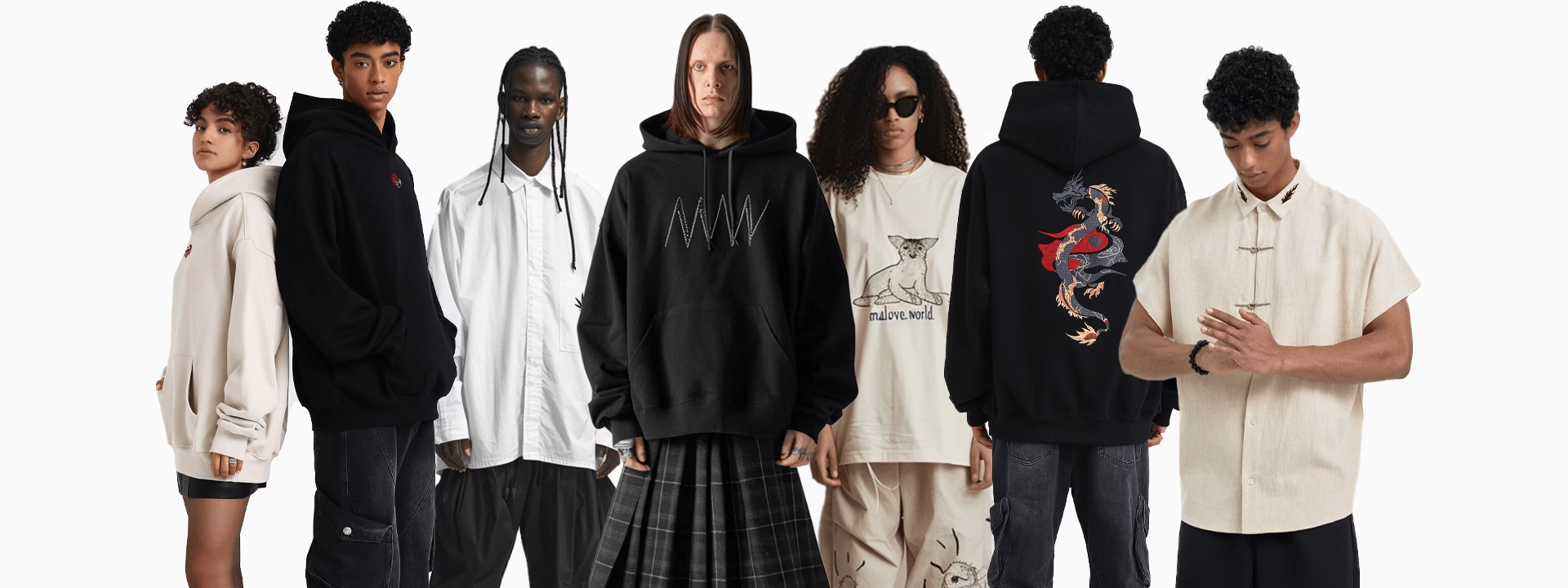
Need a unique cropped hoodie pattern? Want an oversized fit that’s never been done before? Provide us with a reference sample, a detailed sketch, or even just a clear concept. Our team will reverse-engineer it, create precise patterns, and ensure they grade correctly across all required sizes. We handle the technical heavy lifting so you can focus on your brand’s vision. We ensure the final product meets the ISO 9001 quality management standards, guaranteeing consistency.
FAQ
What is the best fabric weight (GSM) for oversized hoodies?
320 to 580 GSM. Lighter fabrics cling to the body and look cheap. You need weight to pull the fabric down for that structured drape. Anything less is a compromise.
What is the biggest mistake brands make with cropped hoodie tech packs?
Ignoring the armhole-to-hem ratio. If you just chop 6 inches off a standard hoodie, the chest balloons out. It looks completely wrong. The entire garment is out of balance.
Drop-shoulder hoodie vs. Raglan for oversized fits?
Drop-shoulder is the streetwear standard. It gives that relaxed, intentional look. Raglan leans strictly athleisure or vintage sportswear. They serve different aesthetic purposes.
How do you handle shrinkage on cropped hoodies?
A 5% length shrinkage ruins a cropped fit completely. Pre-shrunk fabrics or garment washing are absolutely mandatory. We build this into the process from the start.
Can Yali Apparel create a custom silhouette from a reference sample?
Yes. Send the physical sample. Our pattern makers reverse-engineer the measurements and grade it properly for bulk production. That’s what we do.
What fabric works best if I want a raw edge on my cropped hoodie?
Tightly knitted French Terry. Standard fleece rolls up aggressively after one wash, ruining the look. You need stability for a clean raw edge.
What is the minimum order quantity (MOQ) for fully custom silhouettes?
Usually 100 to 300 pieces per colorway. Anyone offering a 10-20 piece MOQ for a ‘custom fit’ is just buying wholesale blanks and lying to you. Be realistic.
Stop wrestling with middlemen. Send your tech packs, your samples, your ideas to Yali Apparel. Get a real, factory-direct quote based on solid manufacturing principles. Let’s build something that fits.